● Sacramental Life at CCY
Mass Times & Becoming Catholic
(RCIA)
-
Entrusted to the Church by Jesus Himself, the sacraments are visible, physical signs to abundantly pour God's invisible life into ours.
-
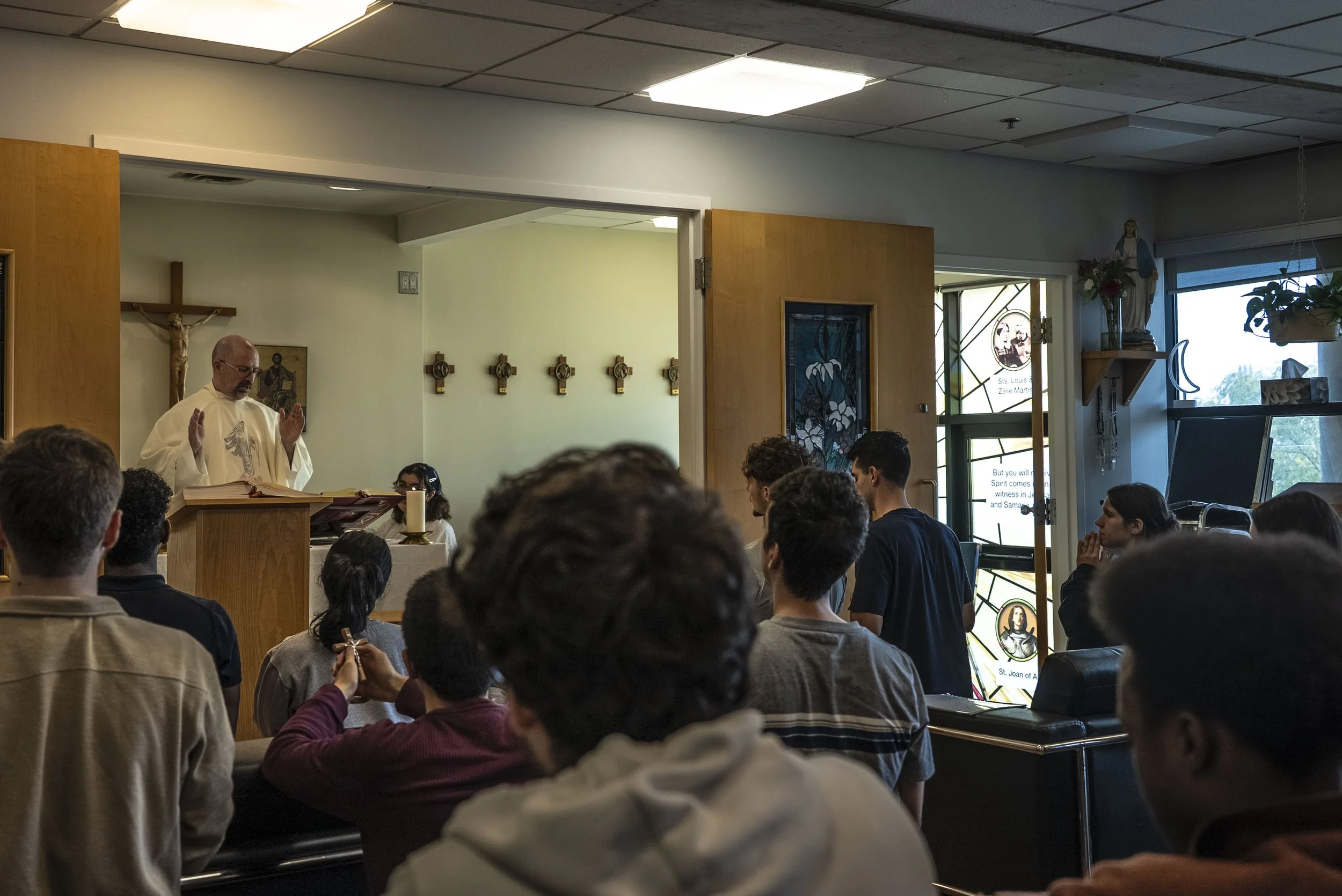
The Holy Mass is deeply rooted in Scripture and Sacred Tradition, and every gesture, response, and prayer has a specific meaning.
The Mass has two main parts: the Liturgy of the Word and the Liturgy of the Eucharist.
Through the Word (the Bible) God speaks to us. We listen to the Old Testament, the Psalms, and the New Testament letters. We stand for the Gospel out of deep respect, because it contains the direct words and actions of Jesus Christ.
The Eucharist is vital to Catholics, and is at the core of our faith. Through it, we encounter Jesus and receive Him as spiritual sustenance. Bread and wine become Jesus' body and blood. This meal nourishes us, and deepens our connection to God and others.
It's the ultimate act of worship, offering grace that facilitates spiritual growth. It unites us with Jesus and the Church throughout history. We approach the Eucharist with reverence and gratitude, aware of its great significance in our faith journey.
Even if you’ve never been to Mass before or it’s been a while, you are most welcome to join us!
-
The Sacrament of Confession (also known as Reconciliation or Penance) can seem intimidating or mysterious, but at its heart, it is simply a profound, personal encounter with God's mercy.
1. Who is actually forgiving the sins?
One big misconception is that the Catholic Church says that a priest has the power to forgive sins. The Catechism of the Catholic Church is clear: only God forgives sins.
The priest does not act by his own power. Instead, he acts in persona Christi (in the person of Christ). God uses the priest as a physical, human instrument.
2. Why not just go straight to God?
This is a very common question. First, Catholics do believe that you should pray and ask God for forgiveness directly and immediately whenever you sin.
However, Catholics believe Jesus established a specific, physical way for His followers to receive forgiveness. After His resurrection, Jesus appeared to His Apostles, breathed on them, and said:
"Receive the Holy Spirit. If you forgive the sins of any, they are forgiven them; if you retain the sins of any, they are retained." (John 20:22-23).
If Jesus gave the Apostles (and after them, the priests) the authority to either forgive or retain sins, they first had to hear what the sins were to make that judgment. Furthermore, the New Testament explicitly instructs believers to "confess your sins to one another" (James 5:16).
3. The Psychological Benefit
God knows that human beings are physical and social creatures. When you deeply hurt someone, feeling sorry on the inside isn't always enough to heal the relationship—you usually need to look the person in the eye and say, "I'm sorry."
Confession is essentially a conversation with God. Saying our sins out loud strips away our pride and forces us to be honest with ourselves. Even more importantly, when the priest says the words of absolution ("I absolve you from your sins..."), you physically hear that you are forgiven. You are given objective certainty of God's mercy, rather than relying on your own shifting, subjective feelings of guilt or remorse.
4. The Seal of Confession
To make this process safe, the Church has an absolute, unbreakable rule called the Seal of Confession. A priest can never, under any circumstances, reveal what is said in the confessional. It is a completely safe place to unburden your soul.
How It Works (The Basic Steps)
When a Catholic goes to confession, the process looks like this:
Examination of Conscience: Before entering, you reflect on your thoughts, words, and actions to identify your sins.
The Confession: You enter the confessional (face-to-face or behind a privacy screen), state how long it has been since your last confession, and name your sins.
Penance: The priest offers some spiritual advice and gives you a "penance" (usually a prayer or an act of charity) to help repair the spiritual damage of the sin.
Act of Contrition: You recite a short prayer expressing your genuine sorrow to God.
Absolution: The priest speaks the prayer of absolution, acting in the person of Christ to forgive the sins.
-
In his Gospel account Luke records a story of Jesus on the road to Emmaus (Luke 24). A Bible study with two of his disciples (who were unaware of who He was). After the Bible study Jesus “broke bread” with them to reveal himself in a fresh way. During the breaking of the bread, Jesus gave the bread to the two disciples. As they received it, they noticed who they were sitting with, but then…he disappeared from their sight. Jesus’ last act was to leave them with His presence in bread form.
Immediately the two disciples commented that during the Bible study their hearts had been burning. It was their resurrected Lord and Master himself. In place of His physical presence Jesus gave His presence in the form of broken bread.
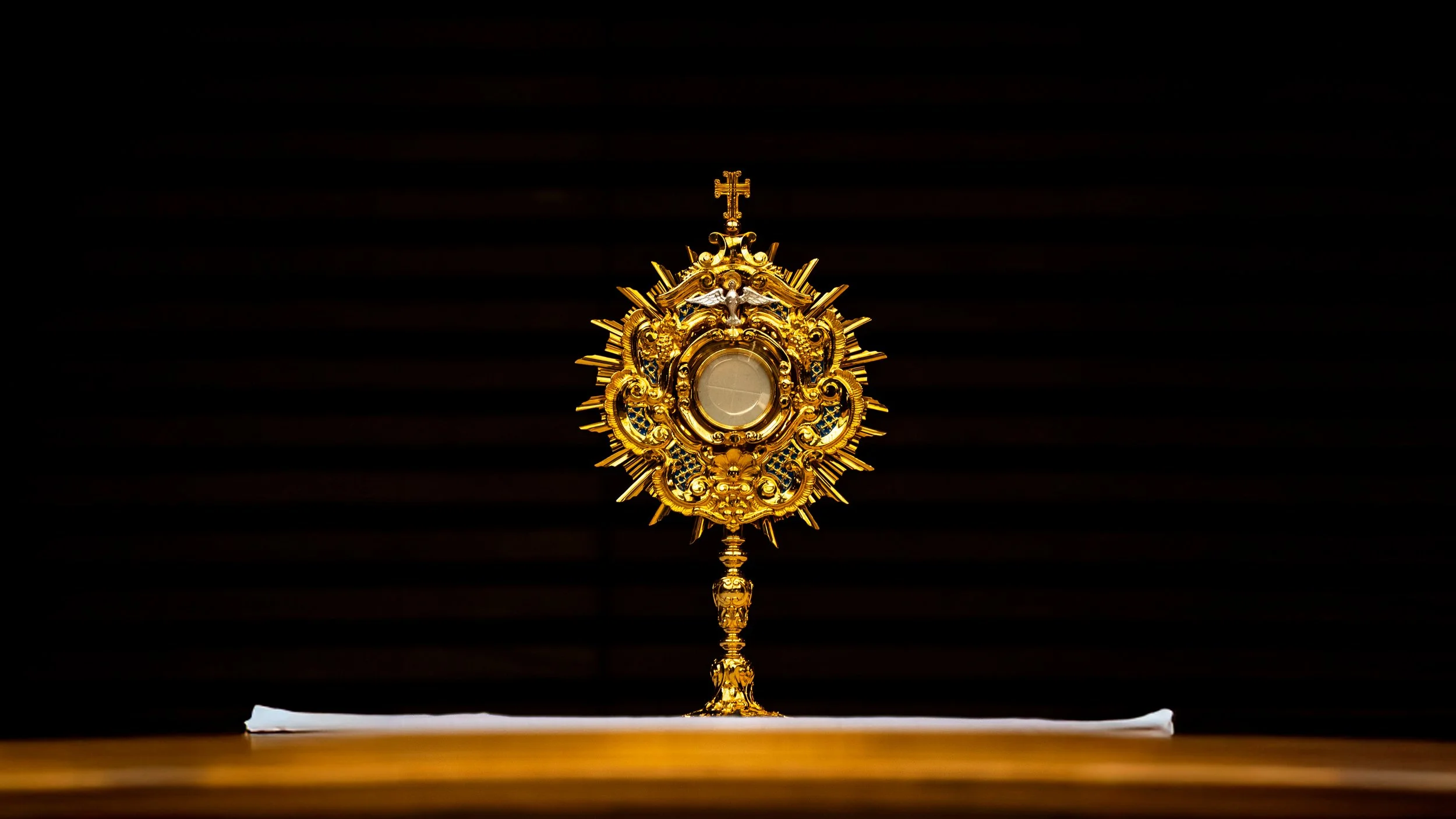
At this Gospel account, Adoration is where Catholics recognize, adore and worship the person of Jesus Christ as God in the Eucharist, the broken bread.
Before the Emmaus event, Jesus had broken bread with his Apostles and said, “This is my body, broken for you.” A few hours later at the Mount of Olives he asked them, “Could you not spend one hour with me?” (Matt 26)
Whether it is one minute or one hour, the time we spend in adoration is when we can listen to Jesus with all our heart, mind, soul and strength. It is a powerful time of spiritual communion with our Lord, and we try to enter into his life, death and resurrection more deeply, asking for the graces we need for our everyday lives, for our families and our friends. Sometimes just slowing down and making ourselves ready makes our “hearts burn” as on the road to Emmaus.
What do I do during adoration?
Sometimes we overthink our time of adoration, but it is simply a time to spend with Jesus Christ. Spending time with Him is always a life-changing experience.
St. John Vianney recounts a story about a parishioner who would spend hours in front of the Blessed Sacrament. Amazed by this, he asked the man, "What do you do in adoration?" and the man replied, "I look at Him and He looks at me."
It can be helpful to reflect on our lives, calling to mind the times when we have failed to follow Christ, seeking his forgiveness and receiving strength to renew our call to conversion. We can also reflect about what we are thankful for, and express gratitude. Many people love to read Sacred Scripture or the writings of the saints and reflect on them in the presence of the Eucharistic Christ. CCY has a bookshelf by the chaplain’s office where devotional literature is available.
During Adoration, we reverently worship our Lord, so we avoid eating, drinking (besides water), listening to music or a podcast, talking, or laying down to respect others and keep the prayerful and silent atmosphere of the chapel. Although you are praying privately with our Lord, you are also in a communal space.
Do I need to bring anything to adoration?
Some find it helpful to bring a journal, a Bible, or a rosary to help them pray during adoration. However, nothing is required other than yourself. Jesus Christ loves us as we are, so it is not necessary to have an "agenda", but it is necessary that we allow our hearts to receive His divine love. While it is good to bring helpful items, it's important to not pile on things to do and forget about the One who is present on the altar.
Mass Times & Confession
5:30 PM-6:30 PM
11:45 AM-12:15 PM
Holy Mass
Sun
Mon - Fri
5:00 PM-5:25 PM
11:10 AM-11:40 AM
Confession
Sun
Mon - Fri
12:15 PM-1:15 PM
TBA
Eucharistic Adoration
Wed
Awaken Event

● Order of Christian Initiation of Adults (RCIA)
Interested in Becoming Catholic?
-
RCIA is the program in the Catholic Church where people learn about the faith and grow spiritually. For those who wish, they can become Catholic through participating in RCIA.
-
RCIA is for anyone who is interested in the Catholic faith and/or becoming Catholic. Whether you come from no faith background, another religion or another Christian denomination – all are welcome.
-
No! The RCIA program is a multi-week program that gives you the opportunity to learn all about Jesus and the Catholic faith. Close to the end of the program you may choose whether or not you’d like to proceed with being baptized.
-
That’s great to hear. Reach out to one of the members of our staff team and tell them more about it. They will help you find the best part of the program to join.
-
At CCY, the RCIA program takes place from the end of September to Easter Sunday.
For exact timings, please connect with us to learn more!
-
The first step is to send us a message to meet with a member of our staff team. We will do our best to find a time that works well for you.
Get in Touch
If you're interested or have more questions, complete the form with a few details about yourself. We'll review your message and get back to you as soon as we can.